Colonel Munro
The Last of the MohicansColonel Munro is the veteran Scottish commander of Fort William Henry and the father of Cora and Alice. A figure of military authority whose tenderness toward his daughters is known even to his enemies, he embodies the collision between public duty and private grief; the novel’s ending leaves him bereaved and withdrawing from the frontier world in which his command has failed to keep his family safe.
Identity and Command
Munro holds Fort William Henry, a post on the shore of Lake George, with a regiment of regulars and a small number of provincials. The force is too weak to match the army Montcalm brings against it, while General Webb remains at Fort Edward with more than five thousand men and the capacity to assemble a substantially larger force. The narrative sets Munro’s exposed position against the hesitation of British officers to confront the French advance outside their works.
His authority is also recalled through the frontier discipline he imposed. Magua tells Cora that Munro had made a rule against an intoxicated Indigenous warrior entering the soldiers’ quarters, and that he punished Magua after the latter entered while under the influence of liquor. Cora regards the punishment as justice; Magua remembers it as an injury for which Munro is responsible. The episode establishes how military discipline, as Munro understands it, becomes part of a lasting personal feud.
Fatherhood and Captivity
Munro’s daughters’ uncertainty about his whereabouts and safety becomes a source of acute anxiety while they are separated from him in the wilderness. Cora tells Heyward that their father cannot be expected to forget the danger of children whose lodging and circumstances he does not know. She insists that his paternal nature cannot be set aside simply because he is a soldier.
Heyward later appeals to Magua by describing Munro as severe toward the idle and wicked but just and humane toward those who deserve his confidence. He says that Munro’s tenderness for his children is exceptional, and that he has seen the old commander weep while speaking of the daughters then in Magua’s power. Magua’s reaction turns visibly hostile, making clear that the appeal has touched a grievance more dangerous than the promised reward.
When Munro is reunited with Cora and Alice, he rushes to them through the mist and embraces them, overcome by emotion. His welcome is both a personal reprieve and a stark reversal of their separation: the commander who has been absent from their perilous journey at last holds his daughters again.
Military Duty and Defeat
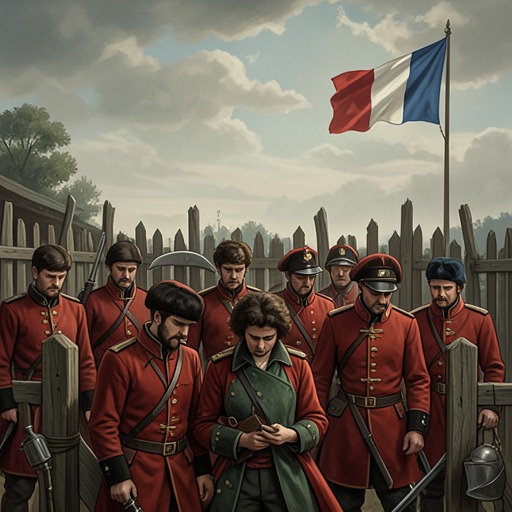
During the negotiations following Fort William Henry’s surrender, Montcalm seeks Munro’s superior and argues that the garrison has done enough for its sovereign’s honor and should now heed humanity. He offers to testify that the defense was gallant and continued as long as hope remained. Munro answers with formal dignity, saying that such praise will carry greater weight when it has been better earned. The exchange presents him as an officer attentive to military honor even when the fort’s situation has become untenable.
After the surrender, Munro’s concern for his daughters persists amid the breakdown of control around the departing garrison. Later, when Magua presses the Delawares to distrust their French allies, he invokes Munro’s old rule and the punishment it brought him as evidence of the wider injuries inflicted by colonial authority. Munro’s actions thus continue to shape the conflict even when he is not present in the scene: discipline intended to maintain order has become, in Magua’s account, a cause for vengeance.
Loss and Ending
At the Delaware encampment after the fighting, Munro sits beside the body of Cora, his head bowed beneath the loss. The narrative describes his grief as partly concealed by his neglected gray hair, while Heyward struggles nearby to master his own sorrow. When the funeral party prepares to depart, Munro says that he understands the death as Heaven’s will and submits, then calls the company to leave, maintaining composure only by force.
The later account says that the Delawares remembered the white maiden and the young Mohican warrior for years. Through Hawkeye, they eventually learned that the Gray Head had died soon afterward; they wrongly believed that military misfortunes had broken him. Munro’s ending therefore extends his bereavement beyond the funeral: the surviving community’s memory preserves him as a father whose grief and defeat became inseparable.
Narrative Significance
Munro’s character is defined by the contrast between the gray-headed commander before his warriors and the tender father described by Heyward and Cora. That contrast does not erase his military role: the weakness of the force at Fort William Henry and the larger failure of British leadership place his command within a campaign shaped by unequal resources and delayed support. Yet his most consequential scenes turn on family feeling—his daughters’ fear for him, his reunion with them, and his final submission to their loss.
His conflict with Magua also shows how an officer’s rule acquires a life beyond its immediate military purpose. For Munro, punishing a breach of discipline is justice; for Magua, it becomes a remembered humiliation that helps sustain hostility. The novel carries that grievance forward into the larger struggle, while Munro himself ends not in renewed command but in mourning and departure.